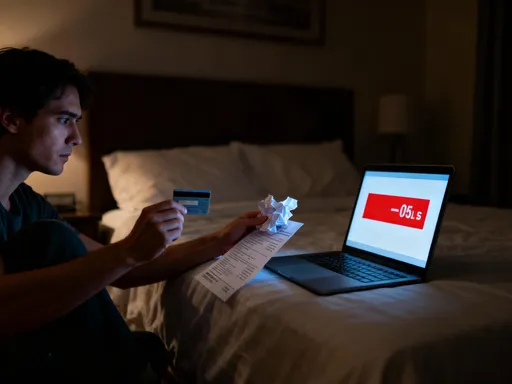
How I Nailed the Perfect Financial Setup for My Exchange Year — Without the Stress
Sending money across borders, juggling tuition, and surviving on a budget abroad—exchange programs are thrilling, but the financial side? Not so much. I learned this the hard way when my first transfer took days and cost a fortune. But after testing multiple tools and strategies, I found what actually works. This is the real talk on choosing the right financial products for studying overseas—no fluff, just what protects your money and peace of mind. The journey wasn’t about finding a single magic solution, but about building a system that combined reliability, affordability, and ease of use. With the right setup, I avoided late fees, sidestepped currency shocks, and even saved money—all while staying focused on my studies and new experiences. This is how you can do the same.
The Hidden Cost of Going Abroad
Studying abroad is often framed as a once-in-a-lifetime opportunity, and rightly so. But behind the excitement of new cultures, languages, and academic challenges lies a less glamorous reality: the financial strain many students weren’t prepared for. The cost of living, tuition, and housing are obvious line items, but it’s the hidden fees—those invisible deductions that chip away at your funds—that can turn a manageable budget into a crisis. These are not minor inconveniences; they are structural inefficiencies built into how money moves across borders, and they disproportionately affect students who rely on regular international transfers.
Currency conversion markups are among the most common yet misunderstood expenses. When a bank or payment service converts your home currency into the local one, they rarely use the mid-market rate—the rate you see on financial websites. Instead, they apply a margin, sometimes as high as 5% or more. That means if you’re transferring $1,000, you could lose $50 or more before the money even reaches your account. For a student on a tight budget, that’s the equivalent of several weeks of groceries or a month of public transit. These losses compound over time, especially if you’re making monthly transfers to cover living expenses.
International transfer fees add another layer. Traditional banks often charge $30 to $50 per wire transfer, and some include additional intermediary bank fees that can push the total cost even higher. Delays are another issue—transfers can take three to five business days, or longer if they cross multiple banking systems. Imagine arriving in a new country, needing to pay rent within 48 hours, only to find your funds are still in transit. This isn’t hypothetical; it happens to students every semester. The stress of not knowing when your money will arrive can overshadow the excitement of starting a new chapter.
Then there are ATM withdrawal fees. Many students assume they can simply use their home debit card abroad, not realizing that each withdrawal may incur a foreign transaction fee of 2% to 3%, plus a flat fee from both their home bank and the local ATM operator. Over a few months, these small charges can add up to hundreds of dollars. What’s worse, some banks block transactions they deem suspicious—like a sudden withdrawal in a foreign country—leading to frozen cards and urgent customer service calls across time zones. These disruptions are not just inconvenient; they can leave students stranded without access to cash during critical moments.
Why Standard Banking Falls Short Overseas
Most students begin their exchange planning with the assumption that their current bank will support them abroad. After all, banks are trusted institutions with global networks—so they should handle international needs seamlessly, right? In practice, the experience is often the opposite. Traditional banking systems were not designed for the realities of cross-border life, especially for temporary residents like exchange students. They operate within rigid frameworks that prioritize domestic stability over international flexibility, leaving users exposed to high costs, slow processing, and limited access.
One of the most glaring shortcomings is the poor exchange rate offered by most retail banks. When converting currencies, these institutions use rates that include a significant markup, often without clearly disclosing it. A student sending money from the United States to Germany, for example, might see a rate that’s noticeably worse than the one available through independent currency comparison tools. This lack of transparency makes it difficult to assess the true cost of each transaction. Over the course of a year, these discrepancies can result in hundreds of dollars lost—money that could have gone toward travel, books, or emergency savings.
Accessibility is another major issue. While some banks have international branches or partnerships, many do not offer full-service support in the student’s host country. This means limited ability to open local accounts, resolve issues in person, or even speak to a representative during local business hours. If a card is lost or compromised, the process of reporting and replacing it can take days or weeks, especially if documentation needs to be sent internationally. Customer service lines may be outsourced to different regions, leading to language barriers and prolonged hold times. For a student dealing with urgent financial needs, this delay can be more than frustrating—it can be destabilizing.
ATM networks also pose a challenge. Many traditional banks have limited or no partnerships abroad, meaning students face high withdrawal fees regardless of the ATM they use. Some banks impose daily or monthly international withdrawal limits that are too low for realistic spending needs. A $300 monthly cap might seem reasonable on paper, but it can be exhausted in a single grocery run in a high-cost city. When students exceed these limits, they’re either blocked from accessing cash or hit with additional fees. These restrictions force students to plan their cash needs with excessive precision, adding unnecessary stress to an already complex transition.
The Rise of Borderless Financial Tools
As the limitations of traditional banking have become more apparent, a new generation of financial tools has emerged to meet the needs of globally mobile individuals—especially students. These digital-first platforms are designed specifically for cross-border use, offering faster transfers, better exchange rates, and greater transparency. Unlike legacy banks, they operate on modern infrastructure that prioritizes speed, low cost, and user control. The result is a growing shift toward solutions that treat international finance not as an exception, but as a standard use case.
Multi-currency accounts are at the forefront of this shift. Services like Wise (formerly TransferWise), Revolut, and N26 allow users to hold, send, and receive money in multiple currencies within a single app. These accounts typically offer real-time exchange rates close to the mid-market level, with transparent, low fees. For a student, this means the ability to convert USD to EUR or GBP without the hidden markups common in traditional banking. Some platforms even allow users to lock in exchange rates for future transfers, protecting against currency fluctuations during periods of volatility.
Instant transfer capabilities are another key advantage. While traditional wire transfers can take days, many digital platforms complete international payments within minutes or hours. This speed is not just a convenience—it’s a financial safeguard. When rent is due, or a tuition installment must be paid by a deadline, knowing that your money will arrive on time reduces anxiety and prevents late fees. These platforms often integrate with local banking systems, allowing students to receive funds directly into their host country accounts without delays.
Prepaid travel cards are also gaining popularity. These reloadable cards can be loaded with multiple currencies and used like debit cards abroad. They offer a middle ground between cash and digital banking—providing the security of a PIN-protected card while avoiding foreign transaction fees. Some include features like real-time spending notifications, budgeting tools, and the ability to freeze the card instantly if lost. For parents who want to support their children financially from home, these cards allow controlled, scheduled transfers without giving full access to a primary account.
App-based budget tracking further enhances control. Many of these platforms include built-in analytics that categorize spending, set monthly limits, and send alerts when thresholds are reached. This level of visibility helps students stay within budget, especially in countries where the cost of living differs significantly from home. Seeing exactly how much is spent on transportation, dining, or entertainment makes it easier to adjust habits before overspending becomes a problem. These tools turn abstract financial goals into actionable, real-time insights.
Choosing the Right Product: A Framework
With so many options available, selecting the best financial tool for an exchange year can feel overwhelming. The key is not to search for a one-size-fits-all solution, but to apply a clear decision-making framework based on individual needs and priorities. The most effective approach rests on three pillars: cost efficiency, accessibility, and security. Each of these factors plays a critical role in determining whether a product will support—or hinder—a student’s financial well-being abroad.
Cost efficiency starts with understanding the full fee structure of any financial product. It’s not enough to look at the headline transfer fee; students must consider currency conversion margins, ATM withdrawal charges, and any subscription costs. A platform that advertises “free transfers” may still profit from poor exchange rates. The best way to compare is to calculate the total cost of a typical monthly transaction—say, $800 transferred from the U.S. to France—and see how much actually arrives in the local account. Tools like comparison websites or built-in calculators on financial apps can help make these assessments more accurate.
Accessibility refers to how easily a student can use the product in their daily life. Can they withdraw cash from local ATMs without excessive fees? Is there 24/7 customer support in a language they understand? Can they link the account to a local payment system like Apple Pay or Google Pay? These practical considerations determine whether a product integrates smoothly into daily routines. A service that works perfectly online may fail in real-world scenarios if it lacks physical access points or reliable support. Students should also check whether the platform provides local bank details—such as an IBAN or routing number—which can be essential for receiving scholarships, stipends, or housing deposits.
Security is non-negotiable. A financial product must protect against fraud, unauthorized access, and data breaches. Look for features like two-factor authentication, biometric login (fingerprint or face recognition), and the ability to freeze or unfreeze the card instantly through the app. Equally important is the regulatory status of the provider. Licensed financial institutions are subject to oversight and consumer protection rules, which means greater accountability in case of errors or disputes. Fund segregation—where customer money is held separately from company funds—is another indicator of a trustworthy service.
The right choice depends on personal circumstances. A student staying for one semester may prioritize low transfer fees and ease of setup, while someone on a year-long program might value long-term budgeting tools and multi-currency stability. Frequent travelers may need a card with no foreign transaction fees, while others may benefit more from strong local support. By aligning product features with individual needs, students can build a financial setup that works for them—not against them.
Balancing Risk and Reward in Cross-Border Finance
Every financial decision involves a trade-off between convenience and risk, and cross-border finance is no exception. The most user-friendly platforms often attract users with promises of speed, low fees, and sleek interfaces. But behind the convenience, questions remain: How safe are your funds? Who regulates the provider? What happens if the service goes down or your account is locked? These are not hypothetical concerns—they are essential considerations for anyone managing money abroad, where access to emergency support may be limited.
Reliability begins with regulation. Licensed financial institutions are required to follow strict rules regarding fund handling, reporting, and consumer protection. In the European Union, for example, electronic money institutions are supervised by national regulators and must comply with anti-money laundering directives. In the United States, certain fintech platforms operate under state money transmitter licenses. These frameworks provide a layer of accountability that unregulated services lack. While not all digital platforms are banks, choosing one that operates under regulatory oversight significantly reduces the risk of fraud or insolvency.
Data privacy is another critical factor. Financial apps collect sensitive information, including bank account details, transaction history, and identity documents. A provider that uses end-to-end encryption and stores data securely helps protect against breaches. Students should review the platform’s privacy policy and avoid services that share data with third parties without clear consent. Reputable companies are transparent about their security practices and often publish independent audit results or certifications.
Fund safety is equally important. Some platforms offer compensation schemes or insurance for lost or stolen funds. Others use fund segregation, ensuring that customer deposits are not mixed with company operating funds. This means that even if the company faces financial trouble, user money remains protected. While no system is entirely risk-free, these safeguards provide a level of confidence that is essential for long-term use.
The goal is not to avoid digital tools, but to use them wisely. High convenience should not come at the cost of high vulnerability. By evaluating providers based on regulation, security features, and transparency, students can enjoy the benefits of modern finance without exposing themselves to unnecessary risk.
Smart Habits That Multiply Your Money’s Value
Even the best financial tools are only as effective as the habits that support them. Technology can streamline transactions, but behavior determines long-term success. Students who combine reliable platforms with disciplined practices often find that their money stretches much further than expected. These habits are not about extreme frugality, but about intentionality—making conscious choices that align with financial goals and reduce avoidable losses.
Timing currency exchanges is one of the most powerful yet underused strategies. Exchange rates fluctuate daily based on global markets. By monitoring trends and converting money when rates are favorable, students can gain an extra 5% to 10% in purchasing power over the year. Some platforms allow users to set rate alerts or schedule automatic conversions at target levels, making this strategy accessible even for those without financial expertise. This small habit can mean the difference between affording an extra trip or having to cut back on essentials.
Automating expense tracking eliminates guesswork. Instead of trying to remember every coffee or bus fare, students can use app-based tools that categorize spending in real time. Setting monthly budgets for categories like food, transport, and entertainment helps maintain awareness and prevents overspending. Spending alerts—notifications when a certain threshold is reached—act as early warning systems, prompting users to adjust before the month ends. These tools turn abstract financial discipline into concrete, manageable actions.
Using buffer accounts adds another layer of protection. A buffer is a small reserve—say, $100 to $200—kept separately from the main spending account. It acts as a safety net for unexpected charges, timing delays, or minor miscalculations. This prevents overdraft fees and reduces stress when transfers take longer than expected. The psychological benefit is just as important: knowing there’s a cushion makes financial management feel less precarious.
Regular financial check-ins—weekly or biweekly reviews of spending and balance—help maintain momentum. These short sessions allow students to spot patterns, adjust budgets, and celebrate progress. Over time, these habits compound, turning good intentions into lasting financial resilience.
Building a Financial Safety Net for the Unexpected
No matter how well you plan, surprises happen. A card gets lost. An account is temporarily frozen due to suspicious activity. A medical expense arises. In these moments, having a backup plan isn’t just helpful—it’s essential. A strong financial setup includes redundancy: multiple access points, emergency funds, and clear recovery steps. This isn’t about living in fear of disaster, but about creating freedom through preparedness.
Splitting funds across platforms is a practical way to reduce risk. Keeping all money in one account creates a single point of failure. If that account is locked, access to all funds is cut off. By distributing funds—say, 70% in a primary digital account, 20% in a secondary account, and 10% in cash or a prepaid card—students ensure they always have alternative access. This approach also allows for strategic use: one account for daily spending, another for savings, and a third for emergencies.
Storing offline access is equally important. Digital tools rely on internet connectivity and app functionality. If a phone is lost or a service experiences downtime, having backup methods—like written PINs, recovery codes, or a trusted contact who can assist—can prevent total disruption. These details should be kept securely, such as in a locked notebook or encrypted digital vault, but accessible when needed.
Knowing local support channels provides peace of mind. Students should identify how to reach customer service in their host country—whether through a local number, email, or in-person office. Understanding the process for reporting lost cards, disputing charges, or verifying identity helps reduce response time during crises. Some platforms offer expedited card replacement or emergency cash advances, but only if users know how to request them.
A financial safety net doesn’t eliminate risk, but it minimizes its impact. When students know they have options, they can handle setbacks with confidence rather than panic. This sense of control is what transforms financial planning from a source of stress into a foundation for freedom.
Choosing the right financial tools for an exchange program isn’t just about saving money—it’s about gaining confidence. When you know your funds are secure, accessible, and cost-effective, you can focus on what truly matters: the experience. By treating your financial setup as a core part of your preparation, you’re not just avoiding stress—you’re building a smarter, more resilient approach to global living. The tools exist. The knowledge is available. The power to succeed is in your hands.